-Hi-Res.jpg)

Prehanging
Select a single door, or choose a combination of doors / sidelites / transoms to prehang together.
Any combination of items can be prehung at the factory for easy installation on the job site.
Can't find exactly what you're looking for? Design a custom door to get exactly what you want.

STEP 1
Determine The Opening Size
Every home is unique, with specific requirements for each individual opening. The "Rough Opening" is the structural frame that surrounds a pre-hung door unit.
With accurate measurements of the rough opening, you can confidently select the required door size to ensure a proper fit and an easy installation.
To reveal the structural framing of the rough opening, remove existing interior door casing. Once removed, measure horizontally from stud-to-stud, and vertically from subfloor-to-header. The subfloor is underneath your door unit and finished flooring.
It’s important to measure to the the nearest 1/16" based on the smallest dimension of the rough opening. This will ensure the new door fits in your home. For Width, measure at the top, middle, and bottom. For Height, measure as the left, middle, and right.
STEP 2
Determine Jamb Depth
Measure from the exterior edge of the jamb to the interior edge of the jamb. When measuring, do not include interior or exterior trims - such as brickmold or casing.
Common jamb measurements are:
-
4-9/16"
-
5-1/4"
-
6-9/16"
-
7-1/4"
-
8-5/16"
B.C. Door can manufacture custom jamb sizes for unique applications upon request.

STEP 3
Unit Configuration
Units can be built in a variety of configurations to suit your home and your project.
Note that all configurations can be custom built with round-tops or arched-tops (not shown), in addition to typical square-tops (as pictured).
Filter Configurations

Single Door
NAFS Compliant
Max Slab Size:
3'6" x 8'0"
Hardware:
D. Drill up to 3'0" x 6'8"
Multipoint up to 3'6" x 8'0"

Door with Transom
NAFS Compliant
Max Slab Size:
3'6" x 8'0"
Hardware:
D. Drill up to 3'0" x 6'8"
Multipoint up to 3'6" x 8'0"

Door with left Sidelite
NAFS Compliant
Max Slab Size:
3'6" x 8'0"
Hardware:
D. Drill up to 3'0" x 6'8"
Multipoint up to 3'6" x 8'0"

Door with right Sidelite
NAFS Compliant
Max Slab Size:
3'6" x 8'0"
Hardware:
D. Drill up to 3'0" x 6'8"
Multipoint up to 3'6" x 8'0"
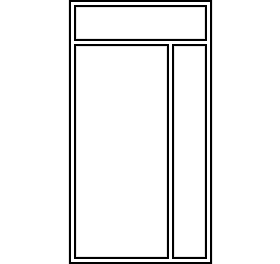
Door with right Sidelite and Transom
NAFS Compliant
Max Slab Size:
3'6" x 8'0"
Hardware:
D. Drill up to 3'0" x 6'8"
Multipoint up to 3'6" x 8'0"

Door with left Sidelite and Transom
NAFS Compliant
Max Slab Size:
3'6" x 8'0"
Hardware:
D. Drill up to 3'0" x 6'8"
Multipoint up to 3'6" x 8'0"

Door with Sidelites
NAFS Compliant
Max Slab Size:
3'6" x 8'0"
Hardware:
D. Drill up to 3'0" x 6'8"
Multipoint up to 3'6" x 8'0"

Door with Sidelites and Transom
NAFS Compliant
Max Slab Size:
3'6" x 8'0"
Hardware:
D. Drill up to 3'0" x 6'8"
Multipoint up to 3'6" x 8'0"

Double Door
NAFS Compliant
Max Slab Sizes:
3'0" x 8'0"
Hardware:
D. Drill up to 3'0" x 8'0" & Multipoint Astragal

Double Door with Transom
NAFS Compliant
Max Slab Sizes:
3'0" x 8'0"
Hardware:
D. Drill up to 3'0" x 8'0" & Multipoint Astragal

Double Door left Sidelite
NAFS Compliant
Max Slab Sizes:
3'0" x 8'0"
Hardware:
D. Drill up to 3'0" x 8'0" & Multipoint Astragal

Double Door right Sidelite
NAFS Compliant
Max Slab Sizes:
3'0" x 8'0"
Hardware:
D. Drill up to 3'0" x 8'0" & Multipoint Astragal

Double Door left Sidelite and Transom
NAFS Compliant
Max Slab Sizes:
3'0" x 8'0"
Hardware:
D. Drill up to 3'0" x 8'0" & Multipoint Astragal

Double Door left Sidelite and Transom
NAFS Compliant
Max Slab Sizes:
3'0" x 8'0"
Hardware:
D. Drill up to 3'0" x 8'0" & Multipoint Astragal

Double Door with Sidelites
NAFS Compliant
Max Slab Sizes:
3'0" x 8'0"
Hardware:
D. Drill up to 3'0" x 8'0" & Multipoint Astragal

Double Door with Sidelites and Transom
NAFS Compliant
Max Slab Sizes:
3'0" x 8'0"
Hardware:
D. Drill up to 3'0" x 8'0" & Multipoint Astragal



STEP 4
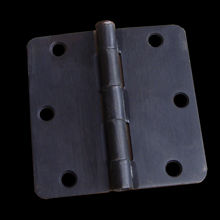
Hinge Color
Most clients select a hinge color to coordinate with the color of the lockset they intend to install.
Actual hinge style and dimensions will vary based on application. Hinge images are representative of finish only.
STEP 5
Sill Color
Clear anodized aluminum (silver) is the most common sill finish selection, however, some clients select a bronze anodized finish color (almost black) to coordinate with the color of hinges & lockset specified.
Wood is also available for heritage or custom applications.
Actual sill style and dimensions will vary based on application. Sill images are representative of finish only.


STEP 6
Weather-Strip Color
Black is the most common color selection. White is available upon request for doors painted white.
STEP 7
Door Swing
Door swing is critical to ensure proper functionality of the space immediately surrounding your door opening.
When replacing a prehung unit, most clients opt for the same swing direction as their current door.
The standard practice for defining door hand is to stand on the outside of the room or building (the secure side) and determine the hinge location.
Left Hand
Inswing
(LH)
Inside

Outside

Inside

Outside

Right Hand
Inswing
(RH)
Left Hand
Reverse
(LH Reverse)
Inside

Outside

Inside

Outside

Right Hand
Reverse
(RH Reverse)
Left Hand Active
Inswing
(LH)
Inside

Outside

Right Hand Active
Inswing
(RH)
Inside

Outside

Left Hand Active
Reverse
(LH Reverse)
Inside

Outside

Right Hand Active
Reverse
(RH Reverse)
Inside

Outside

STEP 8
NAFS Compliance
B.C. Door is capable of manufacturing prehung units that are NAFS compliant for doors up 3'6" wide x 8'0" tall to meet current BC Building Code and National Building Code standards. Sidelites and Transoms can be added to further increase the net-size of a prehung unit.
Speak to your B.C. Door representative for options on doors greater than 3'6" wide x 8'0" tall - or very large Rough Openings.
Highly custom doors - particularly when oversized - are not within the scope of NAFS certification as it is not practical to lab-test these types of doors. In many cases, oversize doors can be approved as long as they are built to NAFS specifications - even though they have not been physically tested in a lab.
In these situations, your homebuilder, architect, building-inspector, and B.C. Door representative should be consulted before your project begins to ensure compliance with all aspects of the Building Code.


STEP 9
Lockset Machining
Modern tubular locksets require standardized machining. Typically:
-
Double Drilled with a 2-1/8" face bore for Latch & Deadbolt, and
-
5-1/2" spacing between the center of the holes
Drilling Height is typically 36" from the bottom of a standard height door and up to 42" for oversize doors.
B.C. Door is capable of custom machining for any tubular, mortise, or multipoint lockset requested.
SPECIALTY OPTION
Multipoint and Mortise Locks
B.C. Door can prepare and install hardware with mortise pockets and/or multiple locking points for added security.
