-Hi-Res.jpg)

Best Practices Buyers Guide
Color Choice
To ensure a long service life, wood doors need thoughtful consideration when choosing a paint or stain color. Following the information within this guide will keep your door looking its best for a long time to come and help ensure that warranty criteria is followed.
Factors Affecting Serviceability
Color choice will impact the serviceability of a door, relative to the environmental conditions where the door is installed.
The primary environmental concern affecting color choice is exposure to light sources. The two most common light sources are:
-
Direct sunlight
-
Reflected sunlight from nearby sources
Light or Dark Color Choice
As a general rule of thumb, transparent (clear) and light colors are suitable for any environmental condition.
Dark colors, however, require thoughtful consideration as to whether they are appropriate for the unique environmental conditions where the door is installed.
Impact of Dark Colors Explained
Dark colors will affect wood when exposed to sustained light sources:
-
A dark colored door will absorb light energy.
-
That light energy will be converted to radiant heat on the exterior face of the door.
-
The interior face of the door will remain at room temperature.
-
The result is one face of the door being hotter than the other face of the door.
This type of temperature imbalance has the potential to cause warping, cracking, joint separation, and other performance problems.
As a performance problem due to a dark color finish is not a manufacturing defect, we do not guarantee doors with dark finishes (including black). This is commonplace within the door industry.
Exterior
Absorbs light energy and becomes hotter
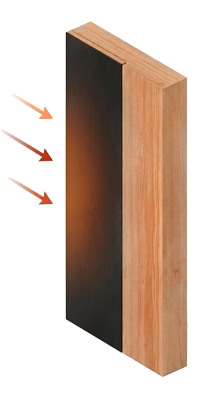
Interior
Remains at room temperature
Environmental Considerations
While clients often stain or paint their doors dark colors without issue, it is important to understand the environment the door will be used in. If a door is regularly exposed to direct sun or reflected light from nearby sources - especially in summer months - a dark finish is unadvisable. If a door has minimal exposure to direct sun and reflected light from nearby sources, a dark finish is generally not an issue.
Some factors to consider when reviewing your environment for light sources include the following examples:

Exposure Aspect for Direct Sunlight
South and West exposures typically have greater exposure to direct sunlight.
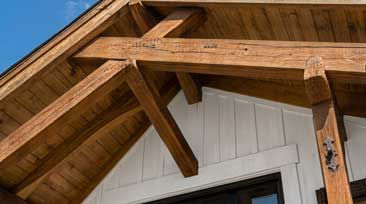
Overhang Depth & Height
More overhang coverage generally means less light exposure.

Surrounding Environment
Reflective surfaces increasing light exposure:
-
Open Ocean
-
Neighboring windows
-
Light colored siding
-
Etc.
Features decreasing light exposure:
-
Dense Trees
-
Terrain Shadows
Mitigating Impacts of Dark Finish Colors
To minimize the impact of dark finish colors, it is important to limit the amount of light exposure the door receives.
This is best done by:
Choosing aspects that receive minimal direct sunlight:
-
North
-
East
Extending overhangs to completely shelter doors from direct sun and reflected light from nearby sources.

Key Take-Aways
It is important to understand the environment the door will be used in.
Transparent (clear) and light colors are suitable for almost any environmental condition.
Dark colors need careful consideration and are unadvisable if a door is regularly exposed to direct sunlight or reflected light from nearby sources - especially in summer months.
If a door is completely sheltered from direct sun and reflected light from nearby sources year-round, a dark finish color is generally not an issue.
It is common to see doors manufactured by
BC Door Co. Ltd. stained or painted dark colors when following these best practices.
DISCLAIMER: This publication is intended for EDUCATIONAL purposes only. The information contained herein is subject to change with no notice, and while a great deal of care has been taken to provide accurate and current information, B.C. Door Co. Ltd., their affiliates, and staff make no claims, representations, or warranties as to accuracy, completeness, usefulness or adequacy of any of the information contained herein. Under no circumstances shall, B.C. Door Co. Ltd., their affiliates, or staff be liable for any losses or damages whatsoever, whether in contract, tort or otherwise, from the use of, or reliance on, the information contained herein. This publication is for educational purposes only and is not intended to provide, and does not constitute, legal or other professional advice. Professional advice and the B.C. Door Limited Warranty for Wood Doors should be consulted regarding every specific circumstance before acting on the information presented in these materials.
Related Resources
Caring for a Wood Door
Consistent maintenance helps preserve both appearance and performance for many years.