-Hi-Res.jpg)

Best Practices Buyers Guide
Suitable Protection & Maintenance for Exterior Wood Doors
Everything you need to know about protecting your wood entry door from weather, UV exposure, and moisture for decades of lasting beauty.
Why Exterior Wood Doors Require Protection
Unlike synthetic materials, wood is a living natural product that responds to its environment. A properly finished and protected wood door can provide exceptional longevity, while exposure to sun, rain, snow, and wind will gradually wear away the protective finish.
The good news is that protecting a wood door is straightforward when the proper finishing systems and installation practices are followed.

What Determines How Often a Door Requires Maintenance?
Three primary factors determine how long the protective finish will last.
1. Finish Quality
The protective coating (top-coat of varnish, polyurethane, or paint) is your doors first line of defense. Higher performance finishes resist UV, moisture, abrasion, mold, and daily wear.
2. Environmental Exposure
Sunlight, wind, rain, snow, and humidity all impact how quickly a finish breaks down. The greater the exposure, the more frequent the maintenance will be.
3. Architectural Protection
A properly designed overhang and door location are your best defense against the elements and dramatically extend finish life.
1. Finish Quality
The Right Finish Makes All the Difference
Top-coat properties can be viewed on a sliding scale when evaluating the level of protection it provides the lumber.
Less Protection

Re-Finish more often
More Protection
Re-Finish less often
*It is not recommended to exceed paint manufacturers maximum specified coatring thickness.
Top-Coat Properties
Greater
(More Protection)
Lesser
(Less Protection)
Abrasion & impact Resistance
Mold, Mildew, and Fungus Resistance
UV (Ultra Vilot) Inhibitor
Coating Thickness*
2. Environmental Exposure
Elements that Wear Away the Protective Finish
The environmental conditions a door is exposed to will determine how quickly the protective top-coat will weather and require re-finishing.
Precipitation
Fog & Humidity
Lower Exposure
(Slower Weathering)
High Exposure
(Faster Weathering)
UV (Ultra Vilot)
Wind
Exposure Type
3. Architectural Protection
Overhang Guidelines
An overhang is one of the most effective ways to protect your door from weather and UV exposure.
For Western Canada's climate, a useful guideline is:
The overhang depth (D) - considered
the width and length an overhang extends horizontally from a door in each direction - should approximately equal the installation height (H) above the door.
These recommendations are best practices, not requirements. Many installations with smaller overhangs perform exceptionally well when environmental exposure is limited.

Recommend Overhang Depth (D) by Climate & Aspect
D = H
D = H
D = H
D = H
D = 2H
D = 2H
D = 1/2 H
D = 1/2 H
D = 1/2 H
D = 1/2 H
D = 1/2 H
D = 1/2 H
West
East
South
North
Mild
Desert
Ocean
Climate
D = H
D = H
D = H
D = H
Wet
Aspect = Direction the door faces

Seal the Glass with a Cap-Bead
A silicone cap-bead around the glass on the exterior side is required to prevent water infiltration, protect the finish, and prevent sealed-unit failure. Cap-beads should be inspected periodically and replaced when signs of wear appear.
When It's Time to Refinish
Watch for these signs that it's time to refinish your wood door.
Dullness or chalkieness that wont be revived with polishing.
Discolouration, fading, or decay of the paint or varnish.
Cracked paint or varnish.
Flaking or scaling of the paint or varnish.
Visible scratches, nicks, or physical damage.
Hairline cracks.
Real World Performance
Built to Preform in Any Climate
B.C. Door products are specified and trusted in some of Canada's most demanding environments, from coastal homes to mountain resorts like the Glacier Creek Lodge at Whistler Blackcomb.
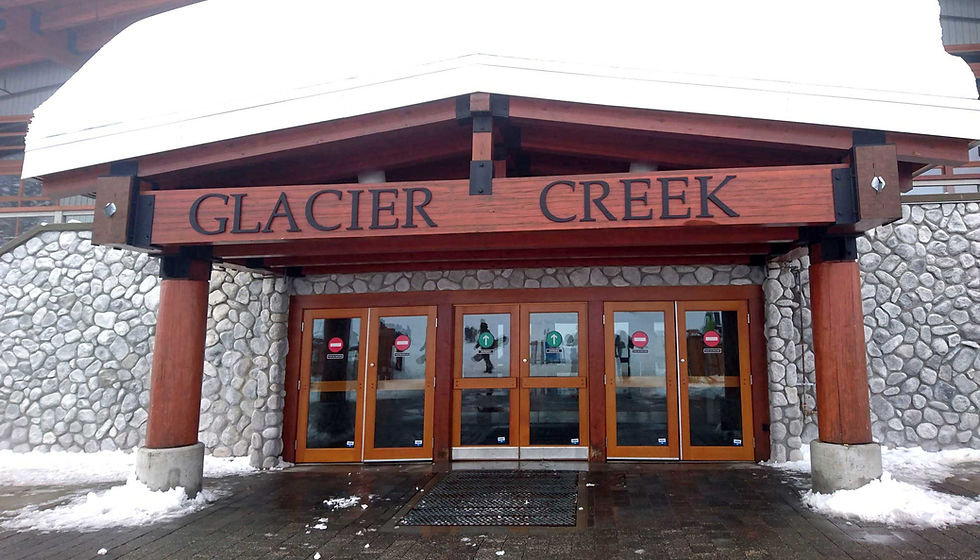
Glacier Creek Lodge, Whistler Blackcomb
British Columbia, Canada
DISCLAIMER: This publication is intended for EDUCATIONAL purposes only. The information contained herein is subject to change with no notice, and while a great deal of care has been taken to provide accurate and current information, B.C. Door Co. Ltd., their affiliates, and staff make no claims, representations, or warranties as to accuracy, completeness, usefulness or adequacy of any of the information contained herein. Under no circumstances shall, B.C. Door Co. Ltd., their affiliates, or staff be liable for any losses or damages whatsoever, whether in contract, tort or otherwise, from the use of, or reliance on, the information contained herein. This publication is for educational purposes only and is not intended to provide, and does not constitute, legal or other professional advice. Professional advice and the B.C. Door Limited Warranty for Wood Doors should be consulted regarding every specific circumstance before acting on the information presented in these materials.
Related Resources
Caring for a Wood Door
Consistent maintenance helps preserve both appearance and performance for many years.